20 May 2026
Whoever plans a frameless aluminium interior door decides not just on a door but on the effect of a whole room. In calm, minimalist interiors every visible edge stands out. A flush aluminium solution only convinces when proportions, sound insulation, hardware and installation logic are in harmony.
More than a design element
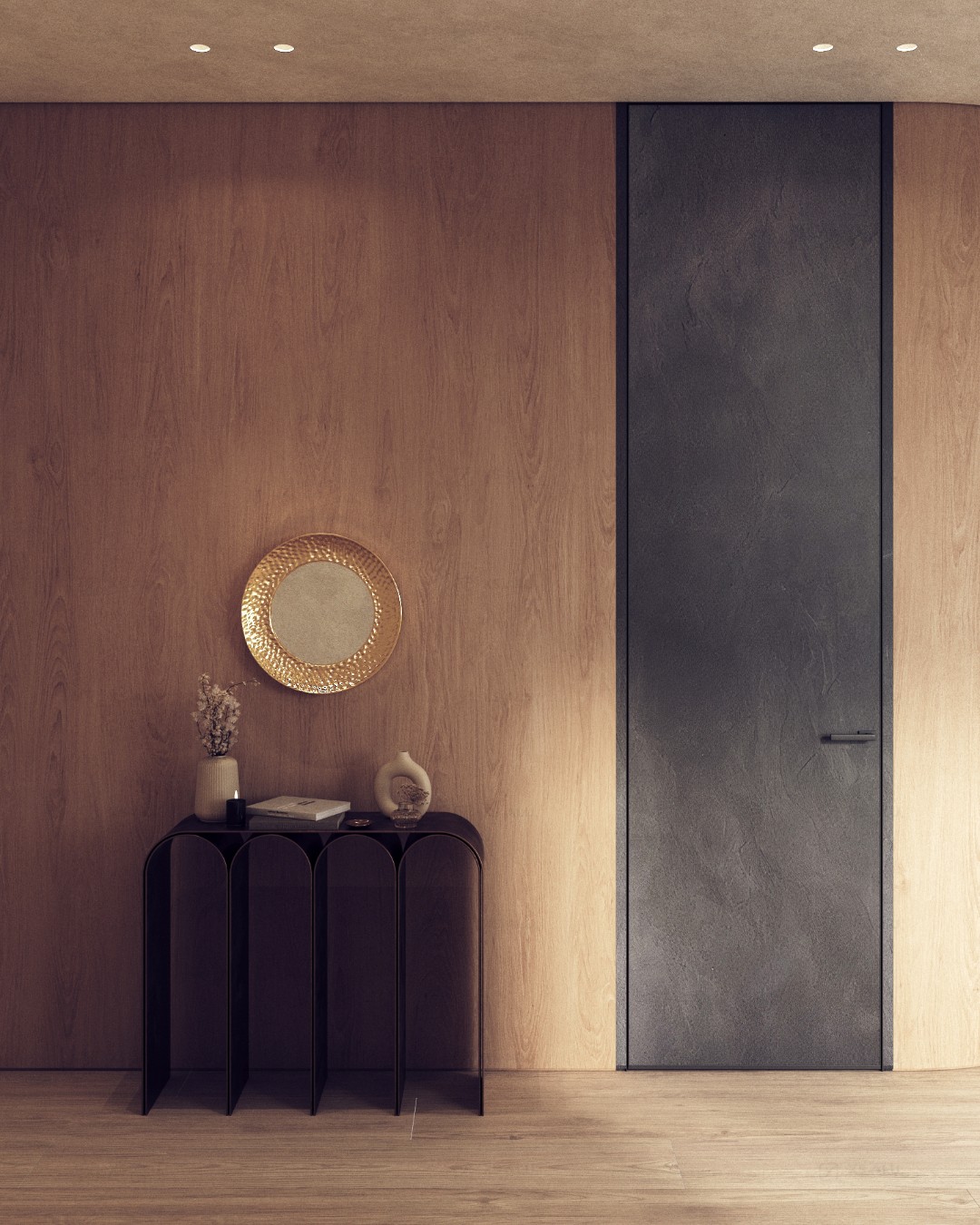
The appeal lies in the calm surface. Instead of classic casings, visible transitions and optical breaks, the door blends precisely into the wall, or stands out deliberately as a purist element. For architects and design-minded owners this is not a side detail but part of the overall composition.
Aluminium has a decisive advantage: it keeps its shape even at narrow sections. That matters for large leaves, minimal joints and lines that should stay clean for many years. Timber constructions can also be premium, but react more to humidity and temperature. Aluminium shows its strength where precision must stay visible over time.
A modern frameless door often has to do several things at once: look minimal, feel good, close reliably and, depending on the project, insulate sound noticeably. This is where decorative looks and real system engineering part ways.
Frameless doors in the architectural context
Minimalism only works in premium interiors when details are planned with discipline. A frameless door consists of recessed connections and a precisely defined wall plane, so it should never be treated in isolation. It always relates to skirting, wall build-up, floor, switches, glass walls and built-in furniture.
It suits open floor plans, loft apartments, premium renovations and representative public spaces especially well. Where glass, metal and clean walls work together, aluminium looks harmonious and consistent. In classic interiors it can work too, if the whole concept carries the same clarity.
The finish matters: white, black or custom powder-coated aluminium can make the door almost invisible, or deliberately highlight it.
Technology decides everyday quality
A premium frameless door should convince not only at first sight but years later. Concealed hinges, precise locks, well-fitting seals and load-bearing profile systems make sure it runs easily and closes precisely.
In the premium segment, sound insulation is often a deciding argument. Open, minimalist architecture should not mean that every conversation, television or home-office call is heard throughout the home. Clarify early how much sound reduction is really needed: between bedroom and hallway the requirements differ from those between a meeting room and an open office.
A narrow sightline alone is not enough. Design and acoustic performance only come together when profile, seal concept, infill or glazing and hardware were developed as one unit.
What planners and owners should consider early
Most problems arise not at the door but at the interfaces. A frameless solution needs precise preparation in the shell and interior phases. Wall thicknesses, installation situation, plaster build-up and tolerances must be defined early; late planning risks visible corrections exactly where maximum clarity was the goal.
The opening type matters too. A flush hinged door is usually best when sound insulation and discreet integration come first. Pivot doors are more representative and architecturally strong but need more spatial discipline. Sliding doors save space and look very light with glass, but structurally they don't always reach the acoustic protection of a premium hinged door.
Door height should be judged technically as well as aesthetically. Floor-to-ceiling leaves look powerful but demand more from statics, hardware sizing and installation accuracy, so choose a system really developed for it.
Aluminium or other materials?
Not every project needs aluminium. For a frameless interior door it is particularly interesting when extreme slimness, dimensional stability and durability are required. It keeps its shape under intensive use and allows constructions that other materials achieve only with larger sections.
Wood offers warmth and can be economical, but reacts more to humidity, temperature changes and mechanical stress. Steel looks robust and characterful, but brings different weight, appearance and manufacturing requirements. Aluminium is the choice where technical precision is part of the design, and recycled aluminium makes it convincing ecologically as well.
Installation decides the result
A top-quality door can lose much of its effect through mediocre installation, and with frameless systems even more so: the smallest deviation from the plane, plaster edge or shadow gap shows later.
Installation must therefore be part of the system. Good solutions are designed for installation, with clear connection details, predictable tolerances and compatible hardware. For fabricators, dealers and contractors, a strong product must also prove itself in production and project management. XS-ALU builds on its own profile systems that connect minimalist appearance, technical performance and production-ready logistics.
Which version suits which project?
In private homes, calm integration usually comes first: flush doors with concealed hinges, premium finishes and good sound insulation. In homes in noisy locations, acoustic quality quickly becomes more important than expected.
In commercial projects priorities shift: frequency of use, low maintenance, repeatability and clear technical documentation. In offices, hotels or premium apartment buildings the door must convince in daily operation, not just in the showroom, and aluminium shows its advantages in durability and stability.
Combined with glazing, side lights, transoms or adjoining partitions bring continuity and light. All elements should speak the same design language; a single minimalist door loses impact if the systems next to it cannot keep up.
What makes the right choice
The best frameless door is not automatically the most invisible or the thinnest. It is the one that cleanly combines design intent, use and technical performance. Looking only at appearance often saves in the wrong place; looking only at technical figures can lose architectural quality.
That is why early coordination between design, manufacturing and installation pays off. When profile development, sound insulation, hardware and installation concept come from one well-thought-out system, the result is a door that needs no explanation: it works every day, stays precise and gives the room the calm good architecture needs. Our Secreto and Esthetic flush doors are developed with exactly this approach.